We use cookies to make your experience better. To comply with the new e-Privacy directive, we need to ask for your consent to set the cookies. Learn more.




Why is natural fertilizer such a great idea?

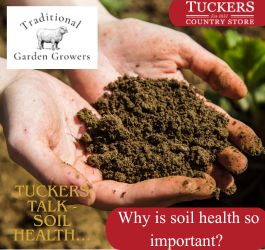
Rethinking Soil Health: Why the Future of Gardening is Powered by Wool
For decades, the modern approach to agriculture and horticulture has followed a familiar, linear pattern: plant a crop, watch it grow, notice a dip in vitality, and blast it with synthetic, chemical-based fertilizers.
At Traditional Garden Growers, an Oxfordshire-based farming business run by founder Eddie Morjee, his wife Emily, and his father, that old pattern is being completely turned on its head. Eddie’s farming philosophy is simple yet radical: prioritize growing with biology, not with chemistry.
Here is the story behind their journey from conventional farming to regenerative horticulture, and how an overlooked agricultural byproduct—waste sheep wool—is proving to be a game-changer for soil health.
The Epiphany in the Spray Shed
Eddie’s background wasn't always rooted in eco-friendly, biological farming. Trained in conventional agriculture at Harper Adams University, he spent years learning the standard industrial toolkit: livestock management, chemical applications, and complex synthetic fertilizer calculations. After graduating, he spent his days behind the wheel of a tractor—flicking fertilizer onto fields and spraying crops.
Then came the turning point.
"I remember walking into the spray shed on the farm... looking at all the signs on these white cans with big red crosses saying 'harmful to the environment, harmful to human health'... and I was in my hazmat suit ready to spray it on people’s food. I understand why we do it, but for me, it didn't sit comfortably."
While listening to regenerative agriculture podcasts in his tractor cab, Eddie had a change of heart. He stepped away from large-scale chemical farming and pivoted to horticulture, spending two years learning about soil health, biodiversity, and eco-restoration at FarmEd in the Cotswolds. Eventually, Eddie brought these principles back to his family’s 28-acre farm, where he began growing vegetables for Oxford University colleges, local chefs, and community box schemes.
The "Soil-First" Mindset: An Underground Economy
To understand why traditional synthetic fertilizers fail in the long run, you have to look at soil differently. Healthy soil isn't just dirt—it’s a living entity. In fact, a single teaspoon of healthy, living soil contains more microorganisms than there are human beings on Earth.
Eddie views this hidden ecosystem as an underground economy:
- The Work Force: Bacteria, fungi, earthworms, and beetles act as miners and decomposers. They break down organic matter and mine the soil for essential minerals.
- The Currency: In return for these minerals, plants feed the soil biology by exuding sugars and compounds created during photosynthesis (exudates).
- The Infrastructure: The physical soil structure—its pore spaces, aggregate stability, and organic matter—acts as the roads and housing for this underground city.
When you apply artificial chemical fertilizers, you bypass this entire economy. They feed the plant directly with instant nutrients. Because the plant gets a "free lunch," it stops feeding the soil biology with exudates. Over time, the soil life starves, the structure collapses, and the plants become addicted to chemical inputs—creating a costly and unsustainable cycle.
Enter "Wooltilizer": Turning Waste into Growth
While searching for a sustainable, natural solution, Eddie looked at a resource sitting right on his doorstep: sheep wool.
As sheep farmers, Eddie and his family were intimately familiar with a growing crisis in British agriculture—the sheer volume of low-value, waste wool. Roughly 1.5 million kilograms of low-value waste wool (such as belly wool and dags) is produced in the UK every year, with almost no viable market. Many farmers are forced to burn it or throw it on compost piles.
Yet, wool is packed with natural nutrients. Historically, generations of farmers dropped wool scraps into bean furrows and potato ridges because they knew it worked. The challenge? Unprocessed wool is messy, bulky, and difficult to handle in a practical garden setup.
The solution was Wooltilizer—pelletized waste wool designed for modern gardens and commercial growers.
What Makes Wool Pellets So Effective?
Working alongside leading researchers like Professor Tom Sizmur at the University of Reading, Eddie put Wooltilizer through rigorous laboratory analyses and greenhouse growing trials. The results showed that wool acts as a powerful, multi-faceted soil improver:
- Slow-Release Nutrition: Wool breaks down gradually over 6 to 8 months, delivering a steady supply of nutrients throughout the full growing season rather than a sudden spike.
- Moisture Retention: Wool pellets act like tiny sponges in the soil, swelling up to absorb water and locking moisture away near plant roots.
- Improved Soil Structure: As the pellets expand and decompose, they increase soil aeration, aggregation, and water-holding capacity.
- Boosted Microbial Activity: Wool feeds the soil food web, fostering a resilient, living environment that naturally protects plants.
Real-World Results (and a Lesson in Carrots!)
In controlled greenhouse trials, plants grown with Wooltilizer demonstrated darker green leaves (indicating higher chlorophyll levels and stronger photosynthesis), earlier harvests, and higher overall yields compared to unfertilized controls.
However, natural farming always comes with a learning curve! During the trials, Eddie discovered that while hungry plants like tomatoes, potted flowers, and brassicas thrive on wool pellets, root crops like carrots don't like heavy fertility—too much nitrogen causes them to "fork" into chaotic, multi-legged shapes.
Tested by the Experts
Independent trials conducted with garden testers (via Mr. Plant Geek) yielded overwhelming enthusiasm, with 8 out of 9 testers stating they would buy Wooltilizer again. (The only outlier? A gardener whose local squirrel population kept digging up her pots!)
What’s Next for Wool-Based Growing?
The journey doesn't stop with classic wool pellets. Backed by fresh research funding, Traditional Garden Growers is currently testing custom, bespoke blend pellets that combine waste wool with other natural inputs like seaweed, biochar, and bone meal. The goal is to develop specialized, 100% natural pellet formulations tailored for specific crops, from tomatoes to flowering blooms.
By shifting away from synthetic chemicals and embracing circular, nature-first inputs, we can rebuild our soil from the ground up—one pellet at a time.
Are you ready to move from chemistry to biology in your own garden? Whether you're tending raised beds, patio containers, or a full vegetable plot, feeding your soil rather than just your plants is the key to lasting growth. Have you tried natural or slow-release soil improvers in your garden yet? Let us know in the comments below!
August 13, 2026
|
View: 102
|
Categories: Advice & Guides
|
By: <a class="mp-info" href="https://www.edwintucker.co.uk/blog/author/coralie.html">Coralie</a>

About the Author


Future for Ashburton Country Store
November 16, 2022
Forage Kale
March 16, 2022

Get to know the birds in your garden.
October 16, 2025

Christmas and New Year Opening Times 2024
November 29, 2024

Swede
March 16, 2022
Why is natural fertilizer such a great idea?
August 13, 2026

Why choose Metazone for your horse?
August 7, 2026
What is really in your compost?
July 25, 2026

Stay Safe on the Farm.
July 9, 2026