We use cookies to make your experience better. To comply with the new e-Privacy directive, we need to ask for your consent to set the cookies. Learn more.




What is really in your compost?

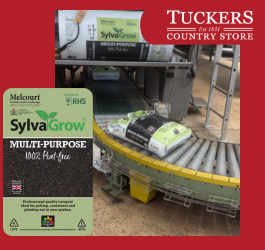
Inside the Melcourt Sylvagrow Finishing Site: How Peat‑Free Compost Really Gets Made
If you’ve ever picked up a bag of peat‑free compost and wondered what actually goes into it — or how companies ensure it performs as well as (or better than) peat — a visit to Melcourt’s finishing site provides the answers. It’s a place where raw materials transform into consistent, high‑quality growing media, and where decades of trialling, tinkering, and responsible sourcing come together in every bag.
From By‑Products to Premium Growing Media
Back in the 1980s, bark was considered little more than landfill waste. Today, Melcourt turns it into an impressive range of products: play surfaces, poultry bedding, reptile substrates, mulches — and, crucially, high‑grade compost ingredients.
Composting itself only entered the picture in 2012, but the evolution since then has been rapid. The finishing site is where these materials are refined, graded, blended, and tested until they become the SylvaGrow compost gardeners know today.
Coconut Fibre: The Unsung Hero of Peat‑Free Compost
One of the most striking sights is the coconut fibre pile. The material arrives in compressed blocks from India. Once it gets wet, it expands dramatically — “fluffs up” — becoming the sponge‑like structure that gives peat‑free compost its water‑holding ability.
Melcourt’s coconut fibre is ethically sourced from inland regions where it helps store monsoon water. They collect quality data for the Responsible Sourcing Scheme, ensuring transparency around environmental impact.
And here’s the surprising part: Transporting coconut fibre from India uses less fuel than transporting peat from Scotland. Even so, Melcourt considers coconut fibre their least ethical ingredient — which shows how seriously they take sustainability.
They also use recycled coir from strawberry farms, giving a second life to material that would otherwise be discarded.
Bark Grading: Precision Down to the Millimetre
Bark is graded through screens with different hole sizes. The smallest particles fall through first, then progressively larger ones. Pine bark often ends up in high‑grade composts because of its structure and consistency.
The goal is always the same: Get the right balance of oxygen, air pockets, and water‑holding capacity so plant roots thrive.
Spruce, Sawdust, and the Housing Market
Spruce is used for pot‑topping mulch, while “silver fibre” — a blend of sawdust and urea dust — makes up around 60% of the compost. Interestingly, demand for some of these materials is driven by the housing market. When fewer homes are built, fewer trees are planted, and the supply chain tightens.
We’re not planting nearly enough trees for future demand, and that’s a challenge the industry is already feeling.
Mixing Hoppers: Where the Magic Happens
The finishing site’s mixing hoppers are a feat of engineering. Raw materials drop onto a belt at precisely controlled speeds and ratios, then move through a pre‑mixing stage. Smaller hoppers add fertilisers.
For organic blends, the ratios change completely — no coconut fibre, and fertilisers like blood, fish, and bone replace synthetic options. Some core materials stay the same, but the balancing act becomes even more delicate.
Consistency Is Everything
Melcourt runs constant trials to ensure every batch performs the same. If one peat‑free compost on the market fails, it damages trust in all peat‑free products — so consistency is non‑negotiable.
It’s far more complex than “putting a few chemicals in a bag and hoping for the best.” Particle size, distribution, nutrient availability, water retention, oxygen flow — every variable matters.
And yes, peat‑free compost costs more to produce. But the environmental benefits and performance gains justify the investment.
Shelf Life: A Different Story from Peat
Peat can be stored indefinitely. Peat‑free compost cannot.
Melcourt recommends using their compost within one year of manufacture. Trials show it still performs well after 18 months to 2 years, but storage conditions matter. If bags get wet and sit for too long, fertilisers can leach out.
It’s a living, breathing material — and that’s part of what makes it so effective.
Sustainable, UK‑Focused, and Always Improving
Melcourt aims to source materials from the UK or Ireland wherever possible. They’re constantly trialling best practice, refining blends, and improving sustainability.
The goal is simple: Make peat‑free compost that performs better than peat ever did.
And judging by the meticulous processes at the finishing site, they’re well on their way.
Watch our video of the finishing site here - https://youtube.com/shorts/sTOYmSwELes?feature=share
July 25, 2026
|
View: 101
|
Categories: Advice & Guides
| Tags: <a class="mp-info" href="https://www.edwintucker.co.uk/blog/tag/ashburton.html">Ashburton</a>, <a class="mp-info" href="https://www.edwintucker.co.uk/blog/tag/crediton.html">Crediton</a>
|
By: <a class="mp-info" href="https://www.edwintucker.co.uk/blog/author/coralie.html">Coralie</a>

About the Author


Future for Ashburton Country Store
November 16, 2022

Forage Kale
March 16, 2022

Get to know the birds in your garden.
October 16, 2025

Christmas and New Year Opening Times 2024
November 29, 2024

Swede
March 16, 2022
Why is natural fertilizer such a great idea?
August 13, 2026

Why choose Metazone for your horse?
August 7, 2026
What is really in your compost?
July 25, 2026
Stay Safe on the Farm.
July 9, 2026